Inflammation & autoimmunity models

Inflammatory and autoimmune diseases are characterised by complex, multi-factorial immune dysregulation, involving innate and adaptive immune responses, cytokine networks and tissue-specific damage. Demonstrating meaningful preclinical efficacy and pharmacodynamic activity therefore requires models that go beyond symptom reduction to capture mechanism-of-action, immune modulation and biomarker response.

At CER Groupe, we design and conduct customised preclinical inflammation and autoimmunity efficacy studies, combining in vivo disease models with supporting in vitro and cell-based assays. As both a research centre and a CRO, we support pharmaceutical, biotechnology and medical device developers with translationally relevant data to guide candidate selection, dose optimisation and progression toward clinical development.

A disease-driven approach to inflammation & autoimmunity

Our approach to inflammatory and autoimmune indications is built on:

  • Mechanism-driven model selection, aligned with innate or adaptive immune pathways
  • Integration of in vitro and in vivo pharmacodynamic data
  • Clinically relevant endpoints, including cytokines, immune-cell profiling and tissue pathology
  • High flexibility and customisation, allowing adaptation of models, triggers, dosing regimens and biomarker panels

This strategy supports programmes ranging from early proof-of-concept to advanced preclinical optimisation, across small molecules, biologics, antibodies, cell therapies and innovative immunomodulatory approaches.

In vivo inflammation & autoimmunity efficacy models

CER Groupe offers a broad portfolio of established and adaptable in vivo models covering acute and chronic inflammation, autoimmune disorders and immune-mediated tissue damage.

Acute and systemic inflammation models

These models support rapid proof-of-concept and early pharmacodynamic assessment.

Available models include:

  • LPS-induced systemic inflammation
  • LPS-induced lung inflammation
  • Acute inflammatory challenge models (cytokine-driven)

Key readouts: Cytokine release (IL-1β, IL-6, TNF-α), acute phase markers, immune-cell activation, histopathology of affected tissues.


Chronic inflammation and autoimmune disease models

Chronic models enable evaluation of disease-modifying activity, immune regulation and tissue protection.

Available models include:

  • Collagen-induced arthritis (CIA)
  • Rheumatoid arthritis-like models
  • Psoriasis-like dermatitis models (e.g. imiquimod-induced)
  • Oxazolone-induced dermatitis
  • Experimental colitis models (DSS, TNBS)
  • Systemic lupus erythematosus (SLE)-like models
  • Myasthenia gravis models

Key readouts: Clinical disease scores, joint or tissue inflammation, immune-cell infiltration, cytokine and chemokine profiles, histopathology scoring.

Organ-specific inflammatory models

For programmes targeting defined tissues or organs, CER Groupe supports organ-focused inflammation models.

Examples include:

  • Pulmonary inflammation and fibrosis-associated inflammation (COPD)
  • Gastro-intestinal inflammation (IBD, colitis)
  • Neuroinflammatory models
  • Skin inflammation and dermatitis models

Key readouts: Organ-specific pathology, imaging where relevant, immune profiling and molecular biomarkers.

In vitro & cell-based assays supporting inflammation and autoimmunity

In vitro and cell-based assays are used to characterise immunomodulatory activity, refine mechanisms and guide in vivo study design.

Anti-inflammatory cell-based assays
  • Inflammatory stimulation models using LPS, TNF-α or IL-1β (2D systems)
  • Cytokine inhibition profiling
  • MSD multiplex cytokine panels and ELISA (e.g. IFN-γ, TGF-β, IL panels, PGE2)
  • NF-κB / AP-1 reporter assays
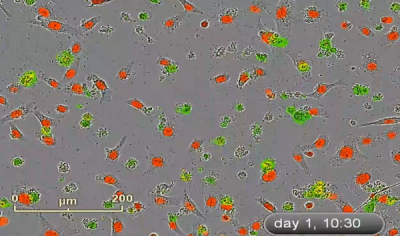
  • Live-cell kinetic monitoring of inflammatory responses (NO/PGE2/COX-2 responses)
Cell characterisation & immunomodulation
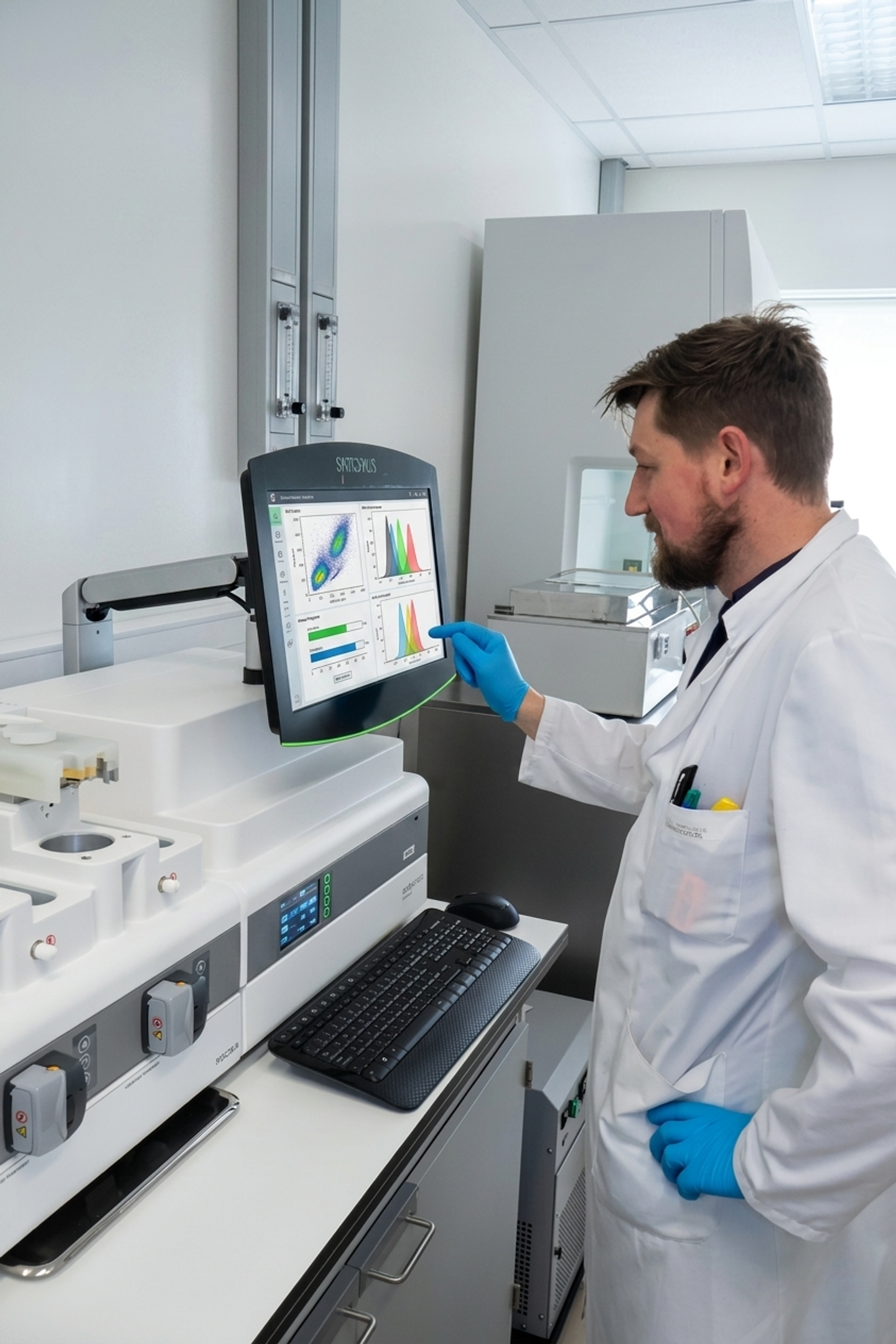
  • Immune-cell phenotyping by flow cytometry
  • Immunocytochemistry / immunofluorescence
  • PBMC-based assays
  • Immune-cell activation and modulation profiling
  • Gene expression analysis (qPCR)
Cytotoxicity and selectivity profiling
  • Cell viability assays (MTT, WST-1)
  • LDH release
  • Apoptosis / necrosis assays (Annexin V/PI, caspase-3/7, TUNEL)
  • Live-cell toxicity monitoring
These assays support early candidate ranking, MoA validation and biomarker selection before or alongside in vivo efficacy studies.

Biomarkers, endpoints & translational strategy

Inflammation and autoimmunity studies at CER Groupe integrate multi-layered pharmacodynamic readouts, including:

  • Clinical and functional disease scores
  • Cytokine and chemokine profiling (simplex and multiplex)
  • Immune-cell phenotyping (innate and adaptive compartments)
  • Histopathology and tissue scoring
  • Molecular biomarkers (gene expression)

This integrated strategy strengthens translational relevance and supports clinical positioning and regulatory discussions.

Custom model development & co-development

For programmes requiring non-standard or highly specific disease settings, CER Groupe offers custom model development and co-development, including:

  • Adaptation of existing inflammatory or autoimmune models
  • Development of bespoke challenge protocols
  • Integration of novel biomarkers or functional endpoints
  • Pilot feasibility and validation studies

This approach is particularly suited for first-in-class immunomodulators and innovative therapeutic concepts.

Why choose CER Groupe for inflammation & autoimmunity studies?

  • Research centre + CRO combining scientific depth and operational excellence
  • Highly customised disease models, not catalogue-driven
  • Strong expertise in immune biology and cytokine profiling
  • Integrated in vitro, in vivo and biomarker platforms
  • GLP-like data integrity supporting downstream development
  • Experience across acute, chronic and autoimmune indications